
1,300+ levels
Levels are grouped into themed collections named after places and images that mean something here — Chorbogʻ, Registon, Yulduzli tun. Each is a set of related words, so you learn a small field at a time.
An Uzbek word puzzle, free on Google Play
Free on Android
Soʻzbogʻ is a word puzzle in the Uzbek language. A wheel of letters sits at the bottom of the screen; you drag your finger from one letter to the next and a word forms above. Lift your finger and, if the word is real, it drops into the crossword grid.
That part is familiar. What makes Soʻzbogʻ different is how closely it is built around the language. Every word you find shows the topic it belongs to, and levels are grouped by theme, so a level about fruit or spices leaves you with a small set of related words rather than a random handful.
The whole dictionary — 2,363 words across 145 themed collections — was assembled and checked by hand. There is no automatically generated word list, because automatically generated word lists in Uzbek produce nonsense.
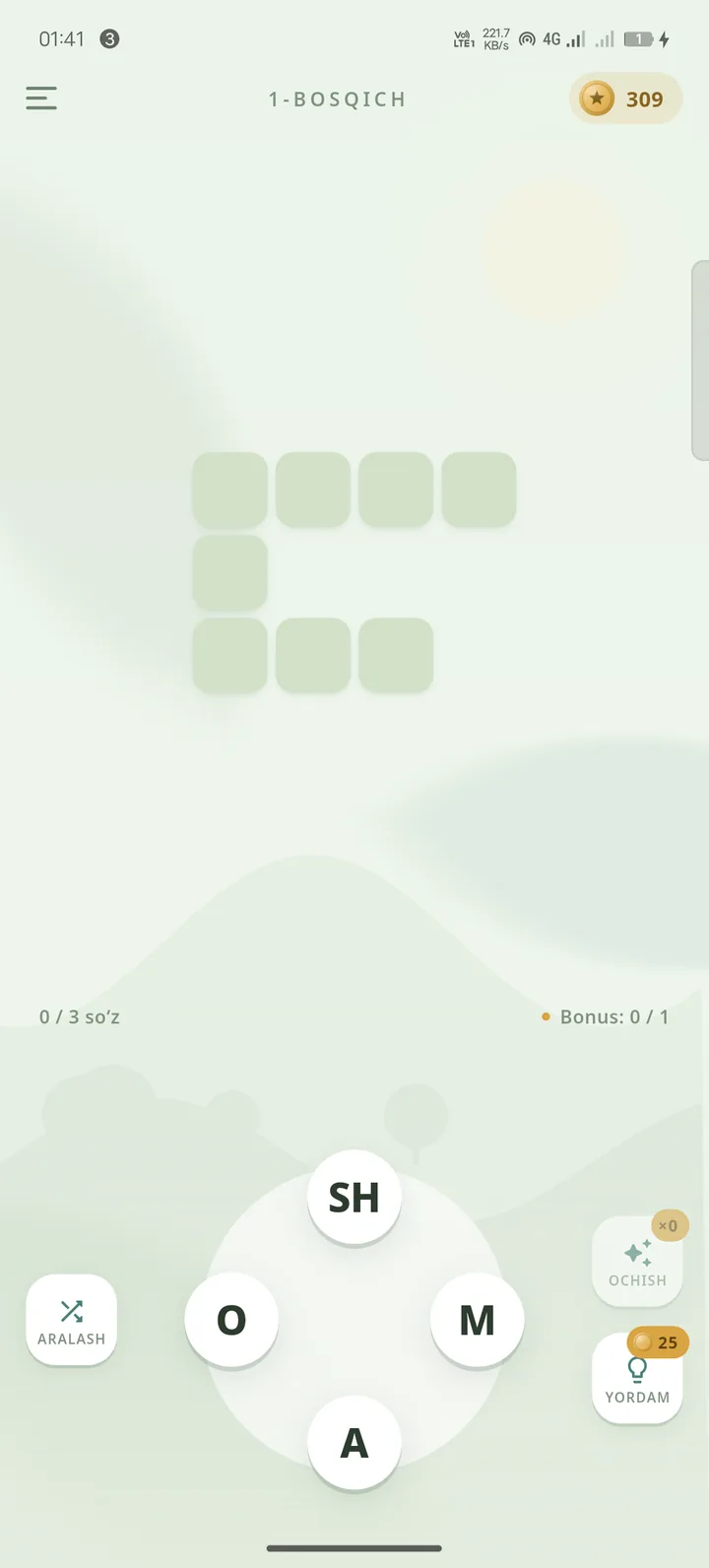
Levels are grouped into themed collections named after places and images that mean something here — Chorbogʻ, Registon, Yulduzli tun. Each is a set of related words, so you learn a small field at a time.
The moment a word lands in the grid, its topic appears — fruit, spices, the home. Topics come from how the dictionary was compiled, never invented afterwards. It is a puzzle you can hand to a child learning the language, or to an adult who wants their Uzbek back.
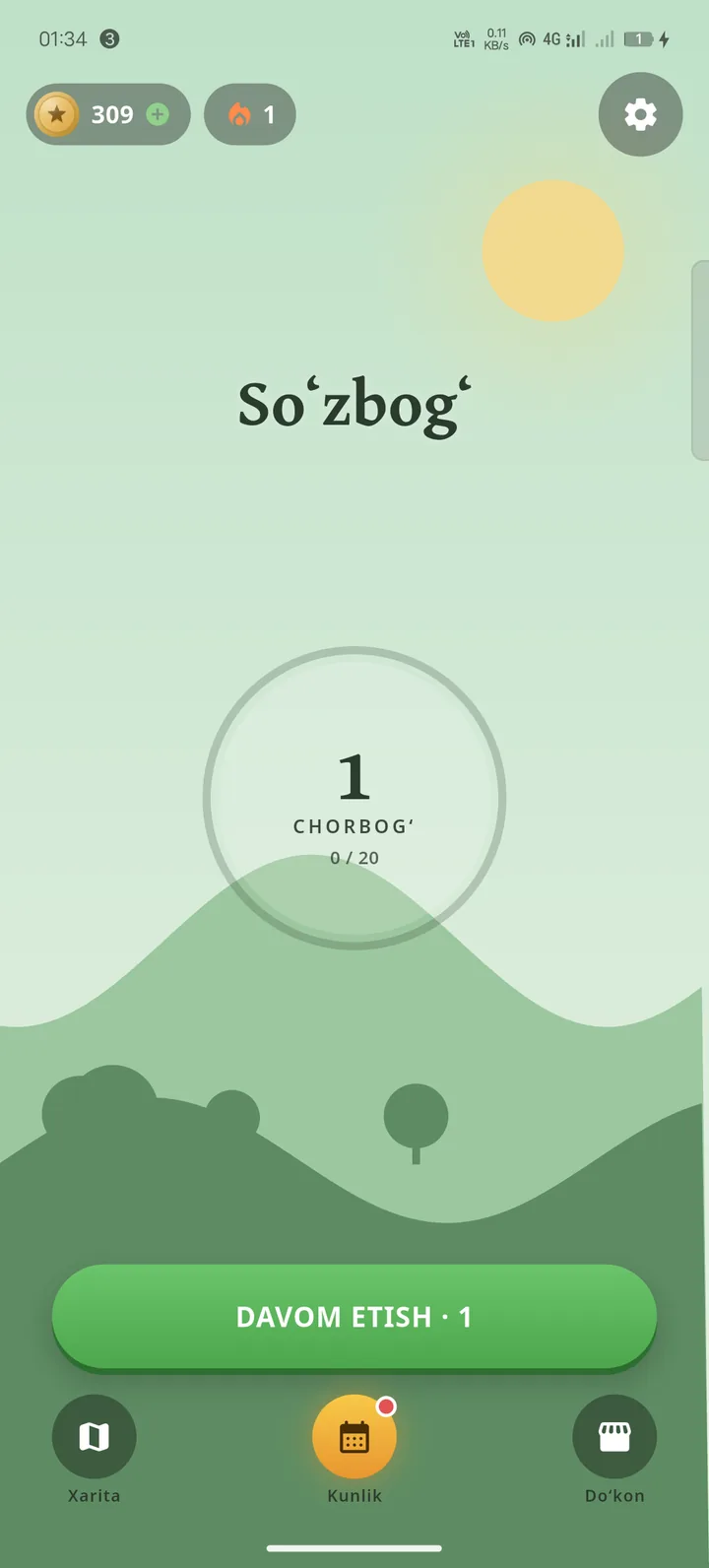
One new puzzle every day, the same one for everybody. Play on consecutive days and your streak grows; the reward grows with it.
The letters usually make more real words than the level asks for. Find them anyway and each one pays a coin — a small reward for being curious.
Quiet, non-intrusive goals that track how far you have come, without notifications nagging you to come back.
The dictionary, sounds, music and fonts all ship inside the app. Airplane mode, a tunnel, a village with no coverage — the game does not care.
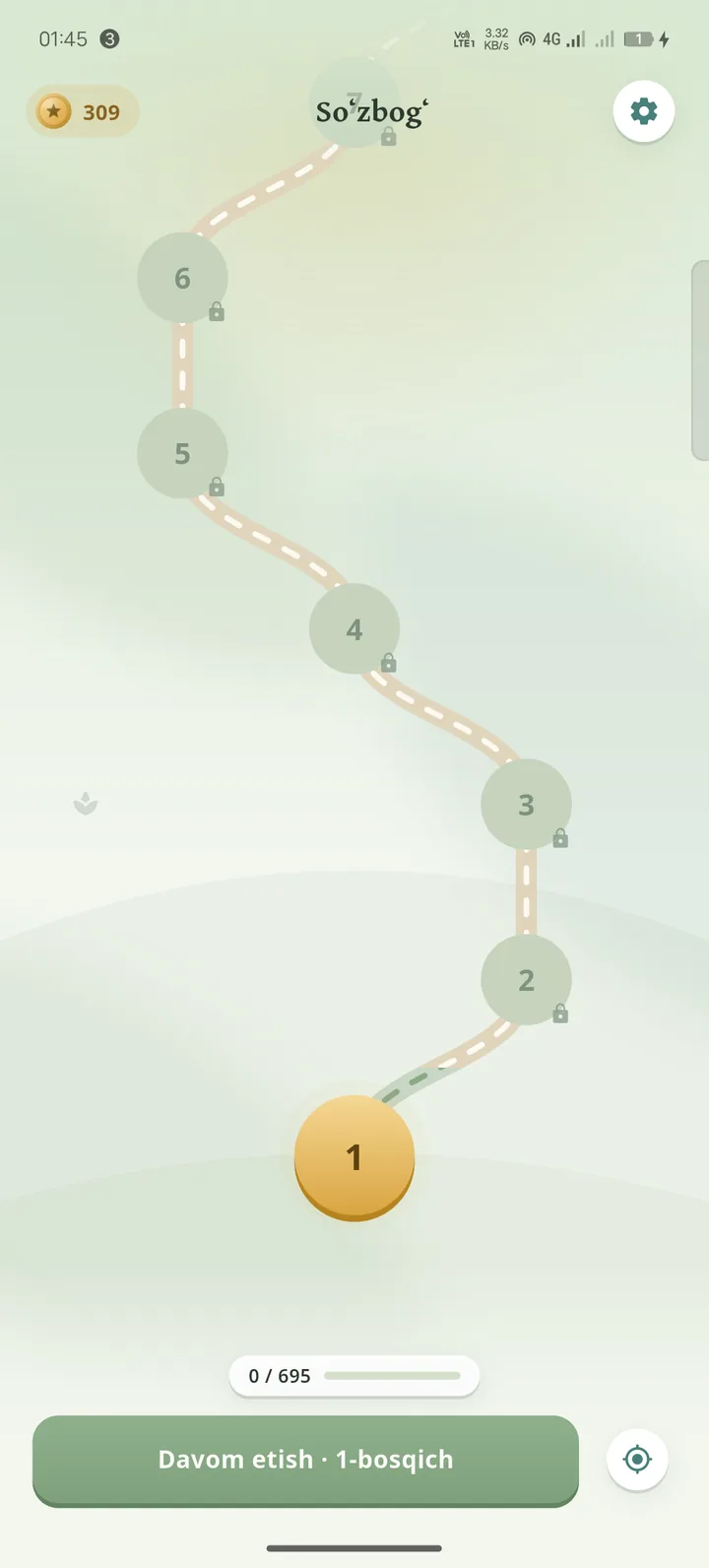
Letters sit on a wheel at the bottom of the screen. Drag from one to the next; the word builds above your finger as you go. Release to submit it.
Uzbek letters written with two Latin characters — oʻ, gʻ, sh, ch — are treated as a single letter, both on the wheel and in the grid. This sounds like a small detail. It is the difference between a game that feels like it was made for Uzbek and one that feels like it was made for English and then relabelled.
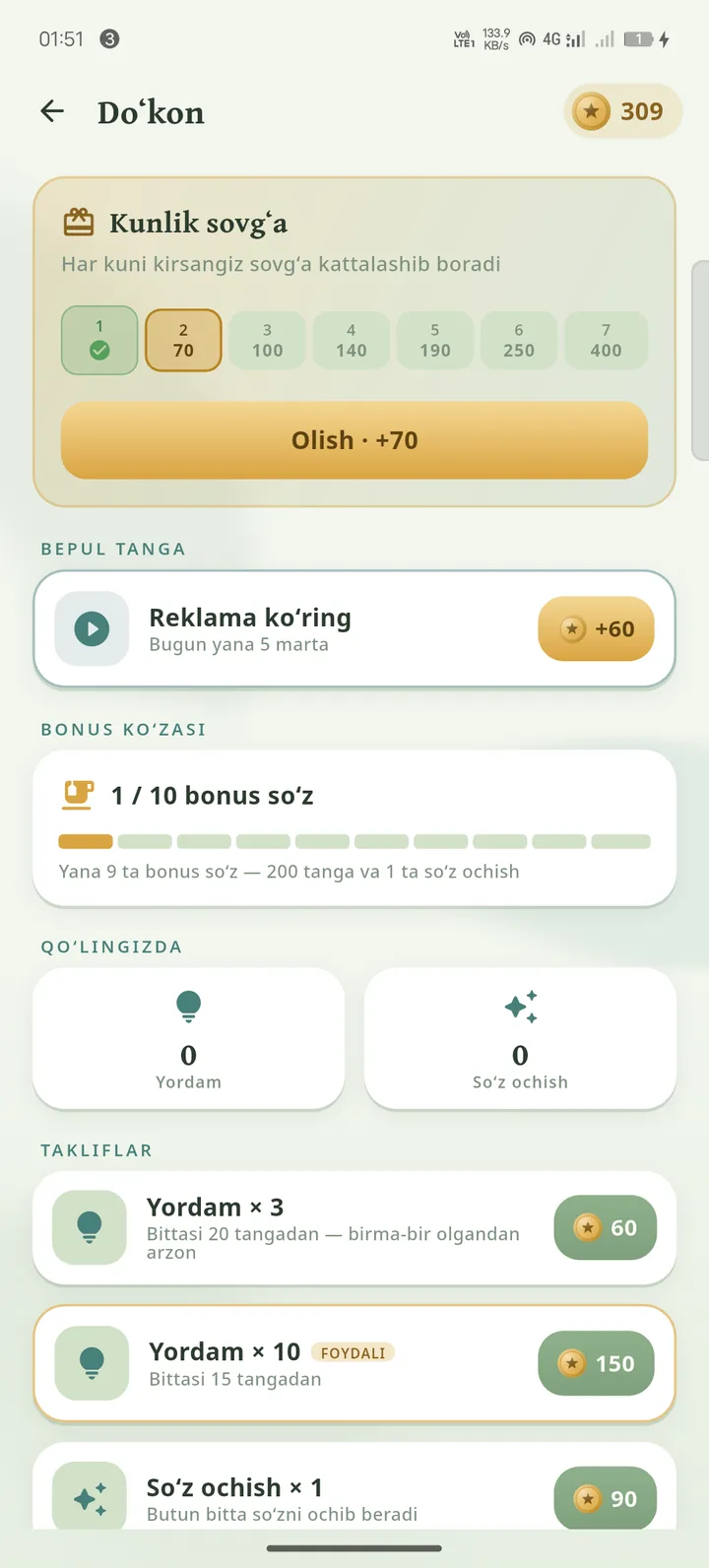
Stuck? A hint reveals a letter in exchange for coins. Coins come from finishing levels, from bonus words, from the daily streak, or — if you want — from watching an optional ad. You can finish the entire game without spending anything.
Soʻzbogʻ never asks for your phone number, location, contacts or photos, and you can play it without any account. Your progress lives on your phone. A few things do reach Google: press the optional “watch an ad” button and Google AdMob receives your device advertising ID so it can pick an ad; buy coins and Google Play handles the payment end to end; anonymous gameplay statistics help us balance the levels; and if you choose to sign in with Google, your progress is backed up so you can continue on a new phone. We never see your card details, and you can reset that advertising ID at any time in Android settings.