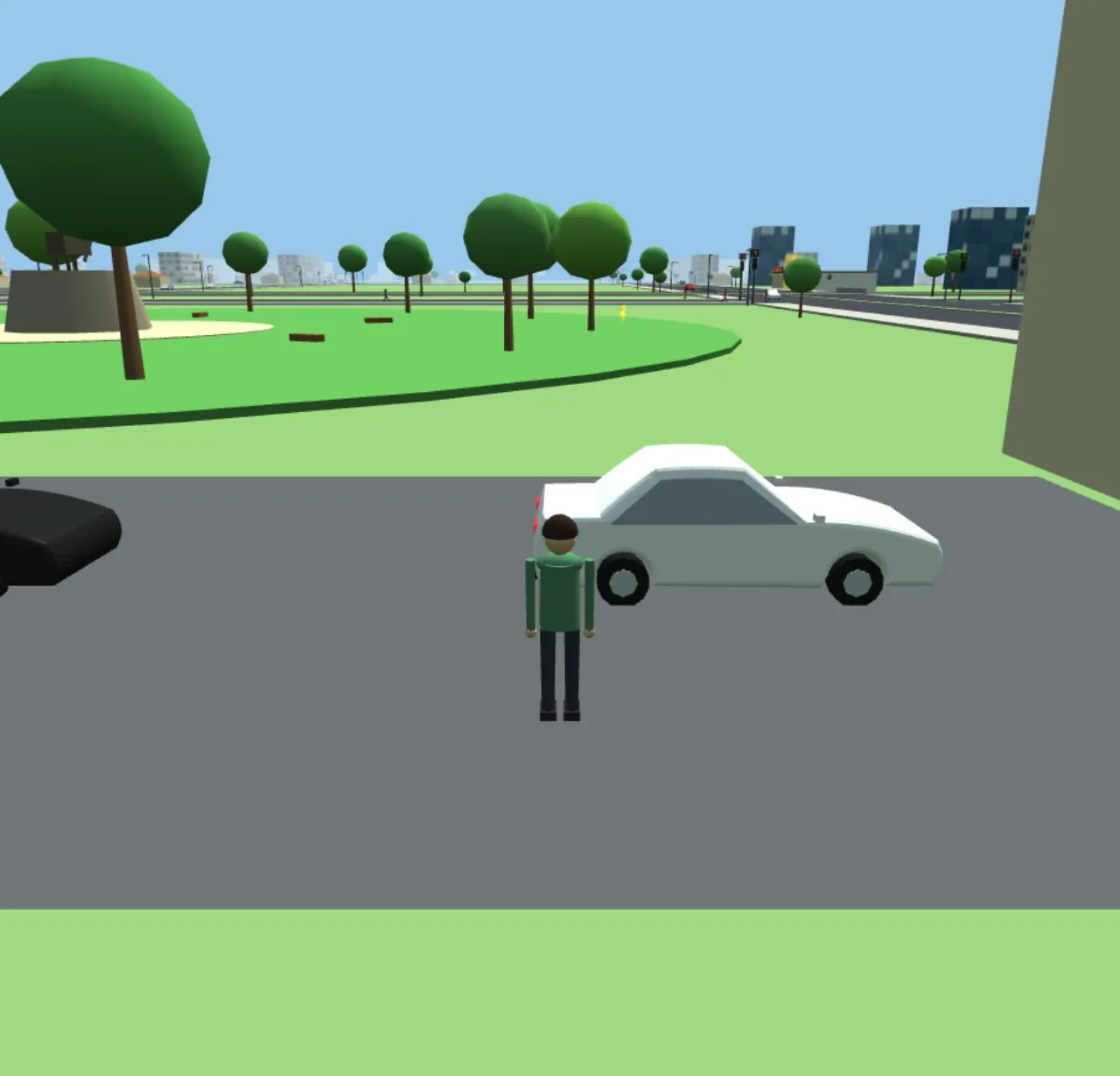
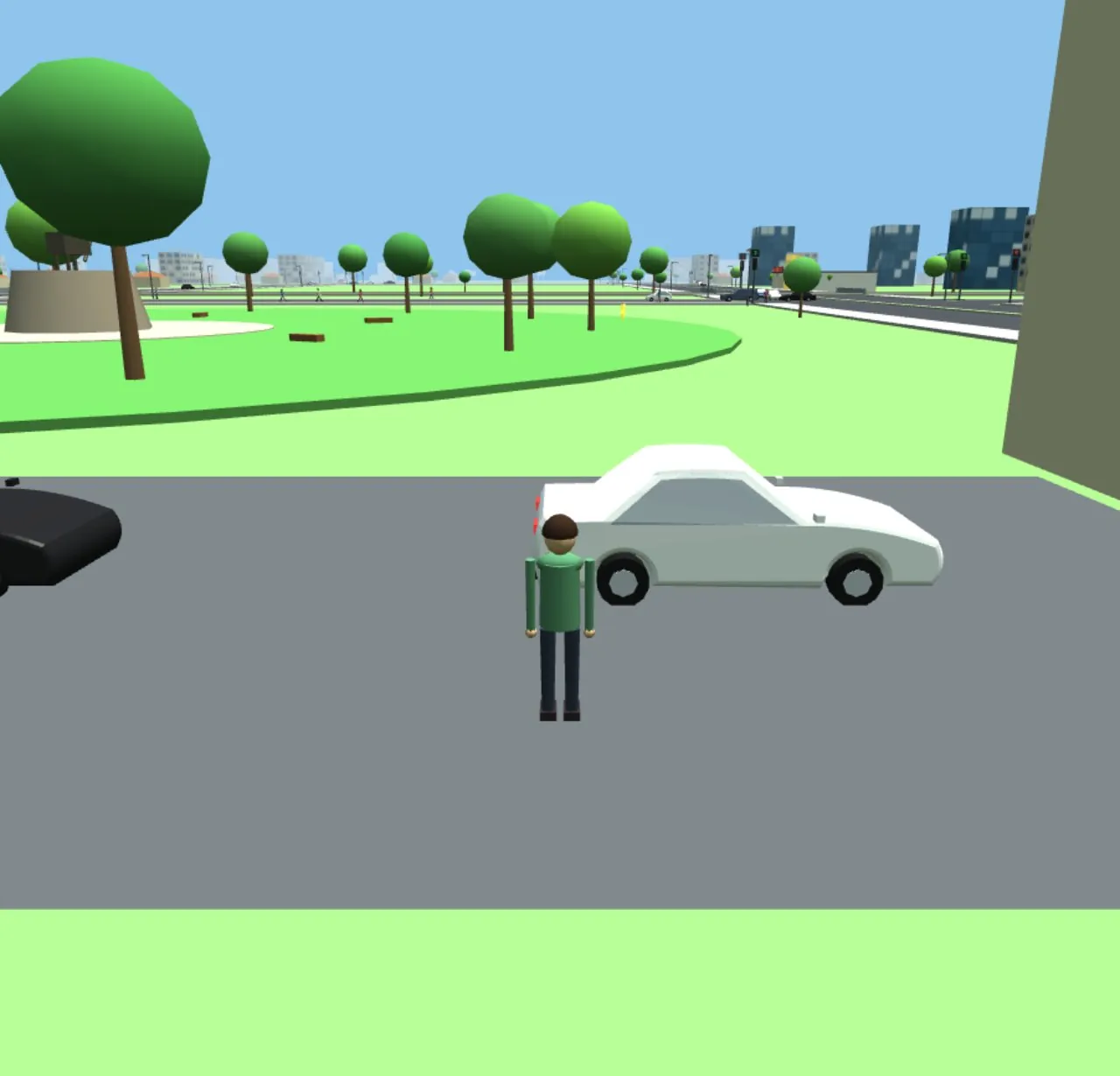
23 cars, real proportions
Each car is modelled at its actual length with its own power and top speed — a Matiz does not drive like a Tahoe. Front wheels turn with the steering, and there are premium dealerships where you can buy better ones.
An Uzbek open world you can drive through in a browser tab
Free and playable right now — it opens in a browser tab, on a laptop or a phone. No install, no account, no payment.
Play in your browser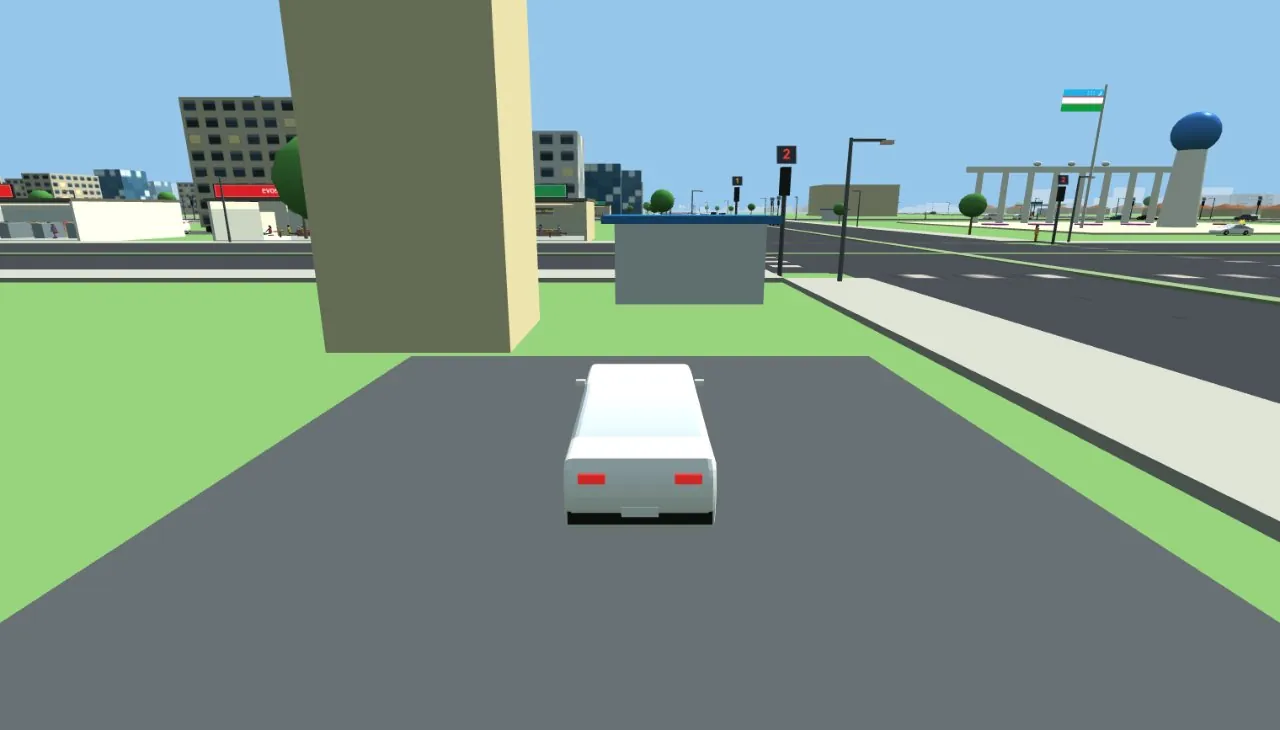
TASHKENT CITY is an open-world driving game built around a 5×5 kilometre reconstruction of Tashkent. You walk, drive, take jobs and earn money in a city whose landmarks you will recognise — because they are the real ones.
It runs entirely in the browser using three.js. There is nothing to download and no account to make: you open a tab and you are in the city. It works with a keyboard on a laptop and with on-screen controls on a phone.
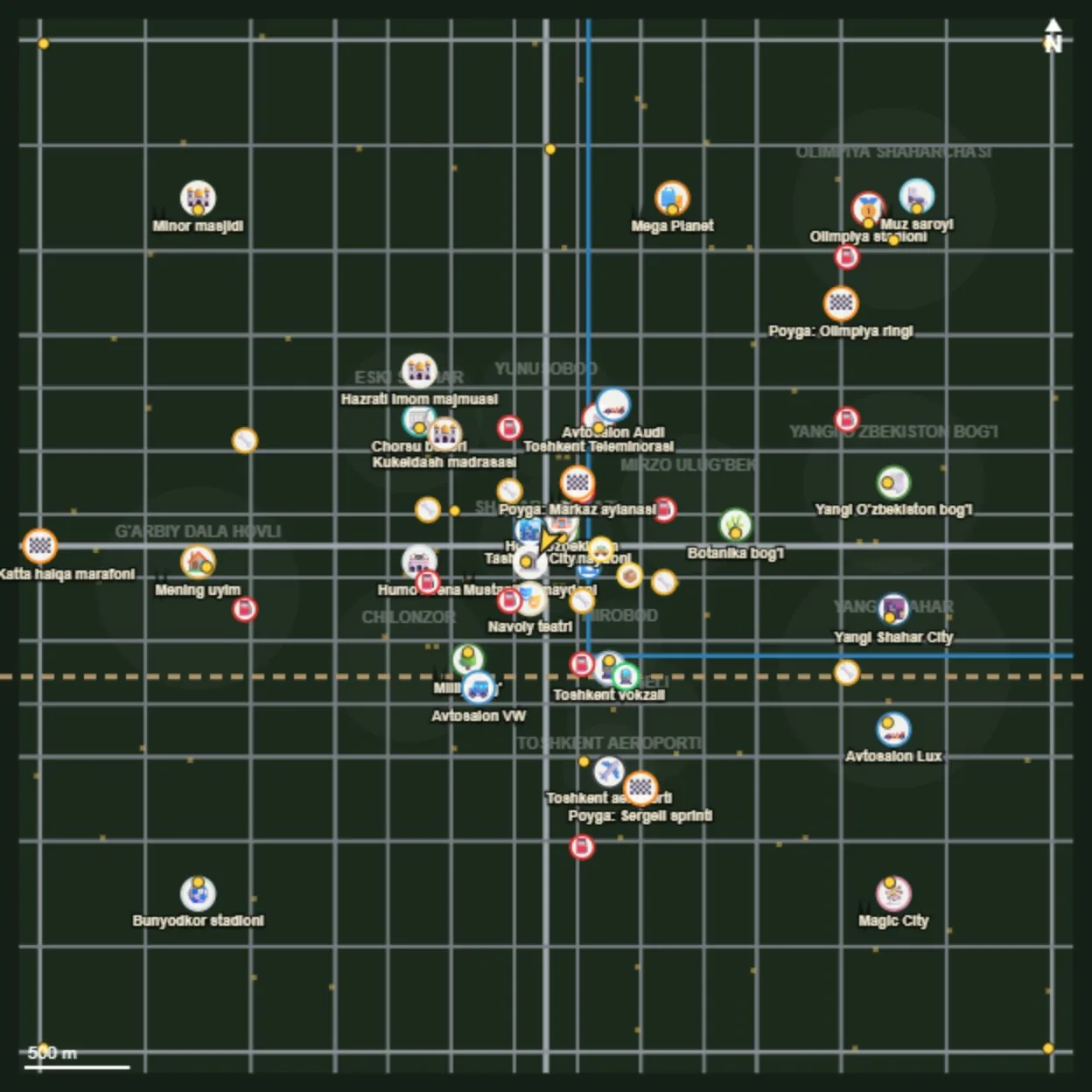
The city is not a generic grid with Uzbek names pasted on. Chorsu bazaar, the TV tower, Hazrati Imom, Kukeldash madrasa, Magic City, the airport, the railway station, Bunyodkor stadium and the Olympic quarter all sit roughly where they sit in life, joined by a ring road.
Each car is modelled at its actual length with its own power and top speed — a Matiz does not drive like a Tahoe. Front wheels turn with the steering, and there are premium dealerships where you can buy better ones.
Taxi fares and parcel deliveries appear across the city. Get to the marker, pick up, drive to the destination — the further it is, the more you earn. Money buys food, fuel, repairs and cars.
Marked race routes across the map — the central loop, the Olympic ring, the Sergeli sprint — with your times tracked.
A full day passes in about six minutes. The sun rises in the east and sets in the west, the sky changes colour, and at night stars and the moon come out. Street lights and headlights actually cast light on the road.
Traffic lights run independent cycles with a second counter, like real Tashkent ones. Pedestrians react if you drive too close. Cars take real damage — bumpers fall off, panels crumple — but never explode.
Around fifty food shops with names you know — Evos, Oqtepa Lavash, Havas, Korzinka — sell osh, lagʻmon, somsa and shashlik to refill your energy. Petrol stations and garages keep your car running.
The map is built from real Tashkent landmarks and districts, laid out roughly as they are in life.
On a phone there is a joystick on the left and context buttons on the right, so you do not need a keyboard.